Why Sunlight Can Be a Hidden Threat to Your Forage
When farmers think about forage losses, they usually focus on rain, moisture, or poor wrapping practices.
However, one factor is often overlooked:
☀️ Ultraviolet (UV) radiation.
Day after day, sunlight affects both the bale and the materials used to protect it. Without proper UV resistance, net wrap can weaken over time, reducing its ability to hold the bale together and protect valuable forage.
For operations that store bales outdoors, UV protection is not a luxury—it is a necessity.
What Is UV-Stabilized Bale Net Wrap?
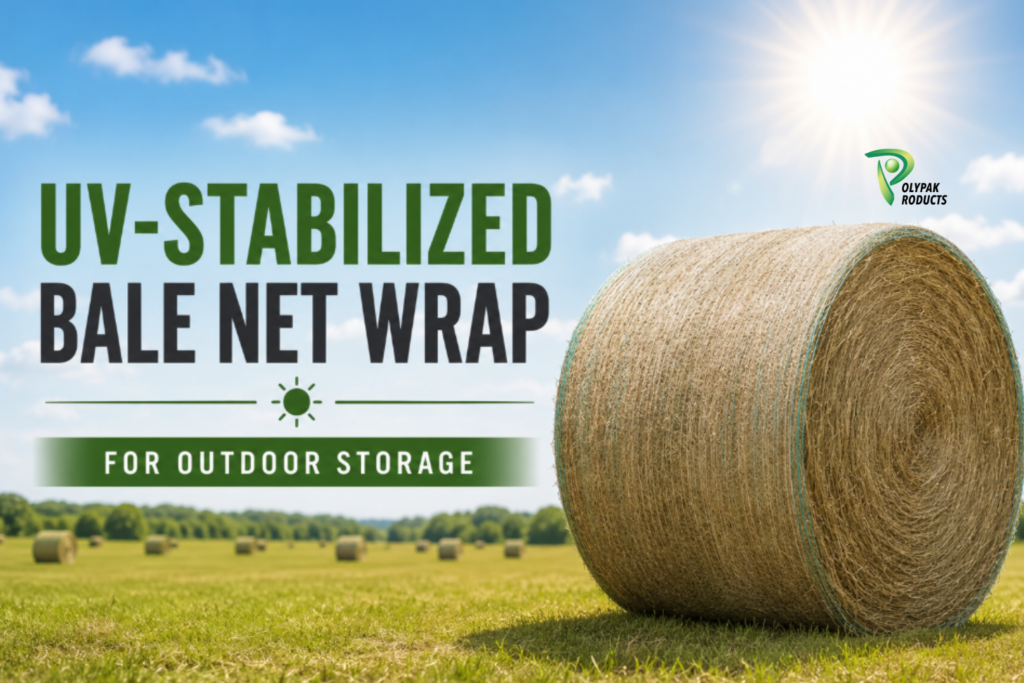
UV-stabilized bale net wrap contains special additives that protect the material from degradation caused by sunlight.
Without these additives, plastic fibers gradually become:
- brittle
- weak
- prone to tearing
As exposure continues, the net loses strength and may no longer provide adequate bale protection.
UV stabilization helps maintain the integrity of the net throughout the storage period.
How UV Radiation Affects Round Bales
Sunlight impacts both the wrapping material and the forage itself.
Effects on the net wrap:
- loss of tensile strength
- reduced elasticity
- increased risk of tearing
- shorter service life
Effects on forage:
- weather damage
- nutrient losses
- reduced feed quality
- dry matter losses
The longer bales remain outdoors, the more important UV protection becomes.
Storage Conditions Matter
Not all farms store bales in the same way.
Short-term storage
If bales are fed or processed within a few weeks, UV exposure may have limited impact.
Long-term outdoor storage
When bales remain in fields for several months, they are continuously exposed to:
- sunlight
- rain
- temperature fluctuations
- wind
Under these conditions, UV-resistant net wrap provides significant advantages.
Signs of Poor UV Protection
How can farmers identify net wrap that lacks sufficient UV resistance?
Common warning signs include:
❌ fading colors
❌ brittle fibers
❌ cracking or tearing
❌ reduced holding strength
❌ damaged bale edges
If these symptoms appear before the end of the storage period, the net may not be suitable for long-term outdoor use.
Benefits of UV-Stabilized Net Wrap
Better Bale Integrity
UV-resistant materials maintain tension and help preserve bale shape.
Reduced Forage Losses
Stable wrapping means fewer exposed areas and lower weather-related losses.
Improved Handling
Strong net wrap reduces the risk of damage during transport and feeding.
Longer Storage Capability
Farmers gain greater flexibility when forage must remain in storage for extended periods.
Choosing the Right Net Wrap
When evaluating bale net wrap, farmers should consider more than just roll length or price.
Key factors include:
✔ UV stabilization
✔ tensile strength
✔ edge-to-edge coverage
✔ compatibility with the baler
✔ reliability during storage
The cheapest option is not always the most economical one if forage quality is compromised.
The Economics of UV Protection
At first glance, UV-stabilized net wrap may cost slightly more.
However, the real comparison should focus on:
- forage preserved
- losses avoided
- bale quality maintained
- operational reliability
A small investment in higher-quality net wrap can help protect thousands of euros worth of forage.
Expert Conclusion
Outdoor storage places significant demands on both bales and wrapping materials.
While rain and handling often receive the most attention, UV radiation is a constant factor that can gradually weaken bale protection.
UV-stabilized bale net wrap helps ensure:
✔ stronger bales
✔ improved forage preservation
✔ lower losses
✔ greater storage flexibility
For farms that store round bales outdoors, UV protection should be considered an essential feature rather than an optional extra.