Choosing bale net wrap is not just about buying a consumable material. It is a decision that directly affects your working speed, forage quality, losses, and overall seasonal efficiency.
In practice, many farmers choose net wrap based on habit or price alone. However, in modern agriculture, this approach can lead to higher costs due to forage losses, machine downtime, and reduced productivity.
In this guide, we’ll explain how to choose the right bale net wrap for your baler to achieve maximum efficiency.
Check Compatibility with Your Baler
This is the most basic—but critical—step.
What to consider:
✔ Net wrap width
Common options:
- 1230 mm
- 1250 mm
- 1300 mm
- 1500 mm
📌 Important:
The net should slightly cover the edges of the bale (edge-to-edge). Otherwise:
- edges may loosen
- forage losses increase
✔ Baler compatibility
Modern balers (John Deere, Claas, Krone, New Holland) are designed for net wrap, but:
❗ older machines may have limitations
❗ correct feeding and tension are essential
👉 Always check your equipment manufacturer’s recommendations.
Choose the Right Roll Length
Roll length directly impacts:
- field downtime
- productivity
- cost efficiency
Typical options:
- 3000 m
- 3600 m
- 3800 m
- 4200 m
📊 How to calculate properly:
Roll price ÷ length = cost per meter
✔ Longer rolls mean:
- fewer roll changes
- less downtime
- more bales per day
📌 Expert tip:
For medium and large farms, 3800–4200 m rolls are usually the most efficient choice.
Strength and Density: The Key to Stable Bales
Not all net wraps are the same—even if they look similar.
Key parameters:
✔ Tensile strength
✔ Weaving density
✔ Tension stability
What this affects:
- higher bale density
- fewer breaks during wrapping
- better shape during transport
📌 Especially important for:
- alfalfa
- high-moisture forage
- large, heavy bales
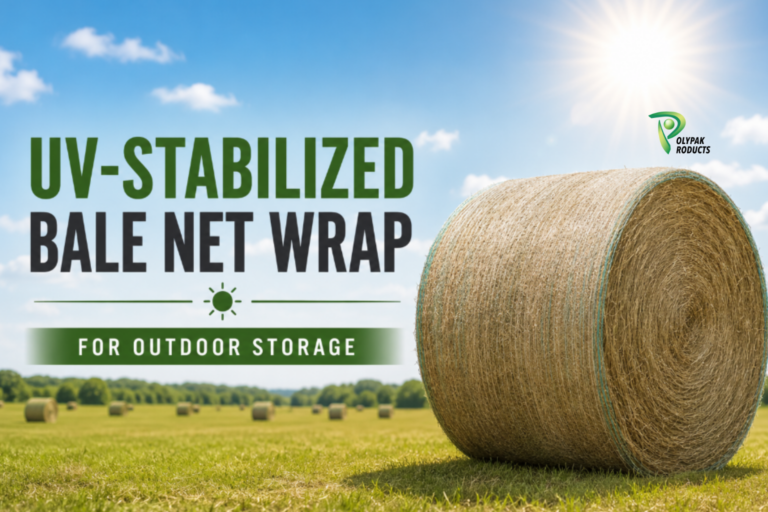
UV Protection: Essential for Outdoor Storage
If bales are stored outdoors, UV protection is not optional—it’s essential.
Without UV stabilization:
❌ net degrades faster
❌ structure weakens
❌ bales may lose integrity
With UV protection:
✔ longer lifespan
✔ stability under sunlight
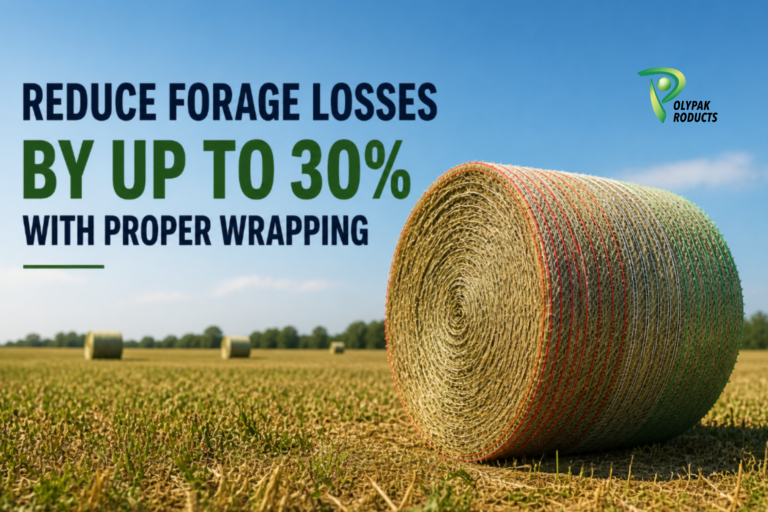
✔ reduced forage losses
📌 Recommendation:
For storage longer than 1–2 months, always choose UV-stabilized net wrap.
Number of Wraps: An Often Overlooked Factor
Even the best net wrap won’t perform properly if the baler is not set correctly.
Recommended settings:
- Straw → 2–2.5 wraps
- Hay → 2.5–3 wraps
- Silage → 3–4 wraps
📌 Fewer wraps:
- higher risk of breakage
- unstable bales
📌 More wraps:
- unnecessary material consumption
👉 The key is balance.
Crop Type Matters
🌾 Straw
✔ basic net wrap is sufficient
✔ focus on cost efficiency
🌿 Hay
✔ requires better density and stability
✔ minimize leaf loss
🌱 Silage / Haylage
✔ maximum strength required
✔ compatibility with stretch film
✔ UV protection is critical
Common Mistakes When Choosing Net Wrap
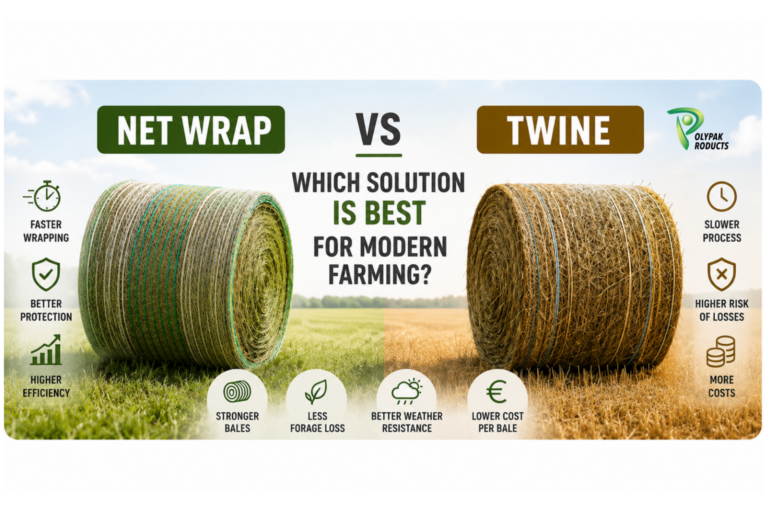
❌ choosing based on price only
❌ ignoring baler compatibility
❌ using non-UV net for outdoor storage
❌ incorrect width
❌ selecting rolls that are too short
Expert Conclusion
The right bale net wrap is not just a cost—it is an investment in:
✔ productivity
✔ forage quality
✔ reduced losses
✔ operational efficiency
📌 The ideal net wrap should:
- match your baler specifications
- offer sufficient roll length
- provide strong and stable performance
- include UV protection
- suit your specific crop type