Choosing between bale net wrap and traditional polypropylene twine is not simply a matter of roll price. This decision directly affects field productivity, forage losses, bale stability during transport, and the overall economics of the season.
Technological Difference
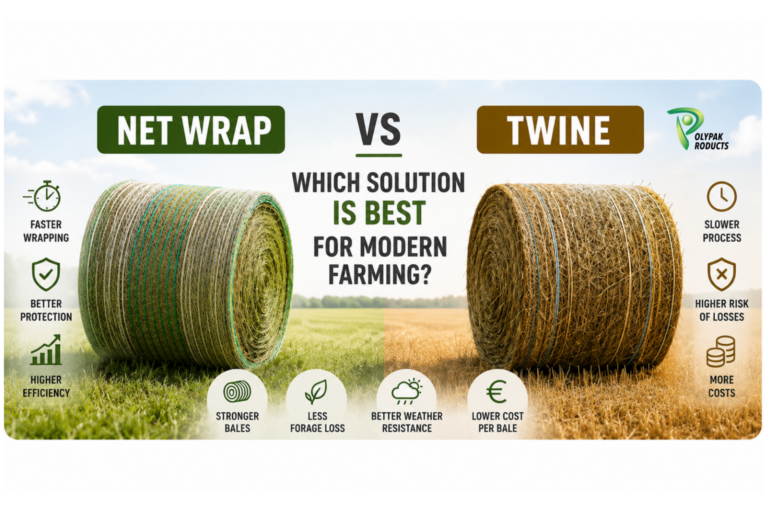
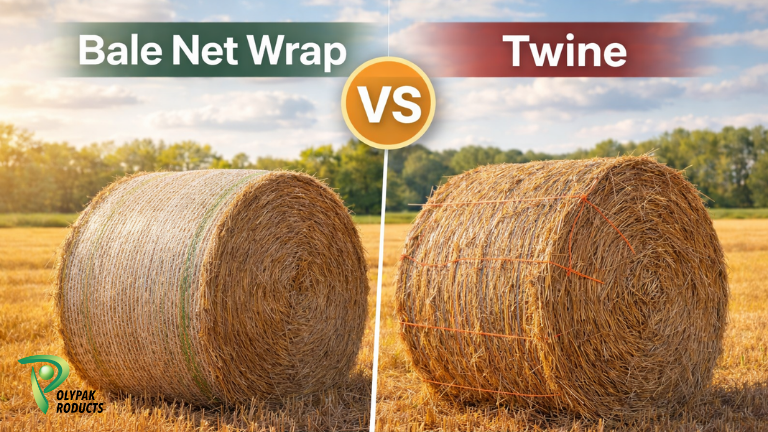
Bale Net Wrap
A modern HDPE material that evenly covers the entire surface of the bale. Wrapping typically requires only 2–3 revolutions.
Twine
Polypropylene string wrapped in a spiral pattern around the bale. It usually requires 15–20 revolutions for full securing.
Wrapping Speed Comparison

📌 Expert insight:
During peak season, saving 20–30 seconds per bale can mean dozens of additional bales produced per day.
Forage Quality and Storage Performance

Net wrap distributes pressure evenly across the bale surface, which:
-
Reduces leaf loss (especially in alfalfa),
-
Improves bale density,
-
Minimizes moisture penetration.
Twine leaves open gaps between spiral layers, increasing the risk of shedding and weather-related damage.
Transportation and Handling
Net wrap creates tighter, more stable bales that:
-
Stack more securely,
-
Maintain shape during transport,
-
Have a cleaner and more professional appearance (important for forage sales).
Twine-wrapped bales are more prone to edge loosening and deformation.
Economics: Which Option Is More Cost-Effective?
At first glance, twine appears cheaper. However, it is essential to consider:
-
Time and fuel costs due to longer wrapping cycles,
-
Forage losses,
-
Additional handling or repair issues caused by unstable bales,
-
Overall daily productivity.

📌 Field experience shows:
For medium and large farms, net wrap typically pays for itself through increased speed and reduced forage losses.
When Is Twine Still Appropriate?
-
Small farms with low bale volumes,
-
Older balers that do not support net wrap,
-
Short-term straw storage.
In most other cases, modern net wrap is the more efficient and technologically advanced solution.
Expert Conclusion
Bale net wrap is not just a consumable material — it is a productivity and quality management tool. It:
✔ Reduces wrapping time
✔ Minimizes forage losses
✔ Produces denser, more stable bales
✔ Improves transport and storage performance
✔ Enhances overall seasonal efficiency
Twine remains a budget option suitable for limited scenarios, but it does not fully meet the demands of modern, high-efficiency farming operations.