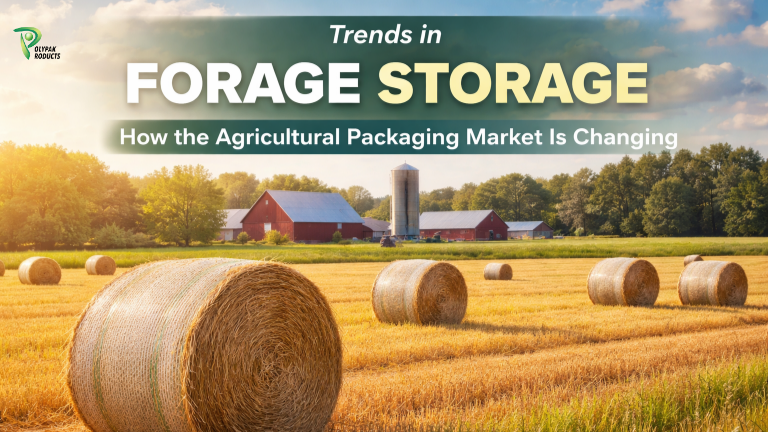
Forage storage is no longer just a post-harvest stage. For modern farmers, it is part of quality management, cost control, and risk mitigation. Hay, straw, silage, and haylage are stored in increasingly unpredictable climate conditions, with rising logistics costs and higher quality requirements. All of this is directly reshaping the agricultural packaging market: bale net wrap, stretch film, silage film, underlayers, and barrier solutions are becoming more important, along with technologies that optimize the wrapping process.
Below are the key trends currently shaping the forage storage market in Europe and globally.
1) Forage Is Now a “Product with Specifications,” Not Just Biomass
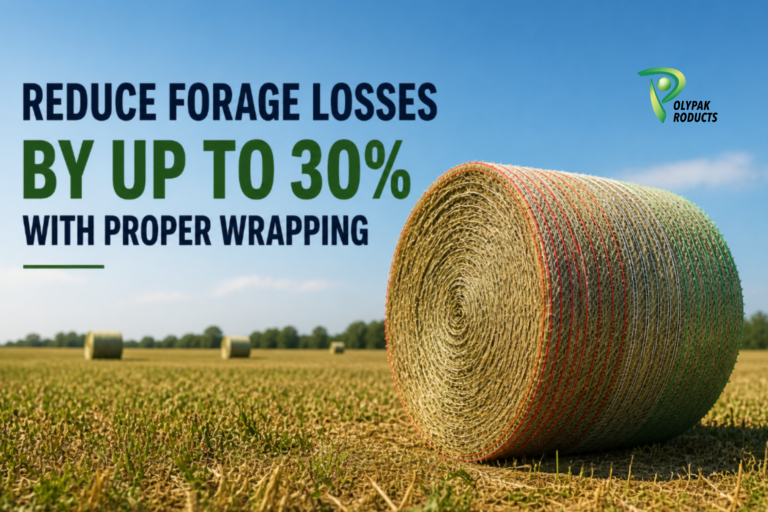
One of the biggest shifts in recent years is that farmers are increasingly calculating dry matter (DM) losses, heating risks, mold development, and contamination from soil and dust. These factors directly impact livestock performance and farm profitability.
If packaging used to be about “just holding the bale together,” today it is a tool for ensuring consistent forage quality.
This is driving demand for:
-
materials with stable technical parameters (strength, elasticity, uniformity),
-
solutions designed for challenging crops (alfalfa, mixed grasses, high-moisture forage),
-
professional guidance on proper baler and wrapper settings.
2) Shift from “Cheapest Option” to “Seasonal Cost Efficiency”
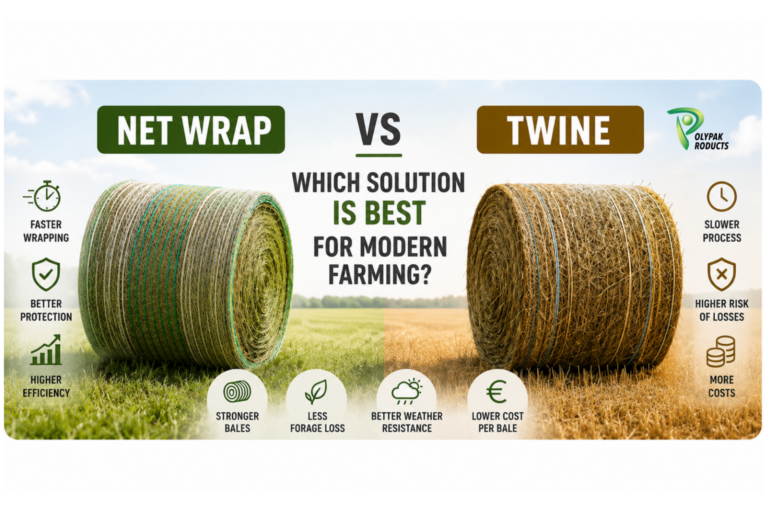
Farmers are increasingly evaluating not just the price per roll, but the cost per bale and total seasonal cost.
This trend supports:
-
longer rolls (fewer roll changes and less downtime),
-
materials with consistent tension and smooth unwinding,
-
comparisons based on price per meter, not just price per roll.
In practice, “slightly more expensive but reliable” often outperforms “cheap but risky” solutions that lead to breaks, overconsumption, or machine downtime.
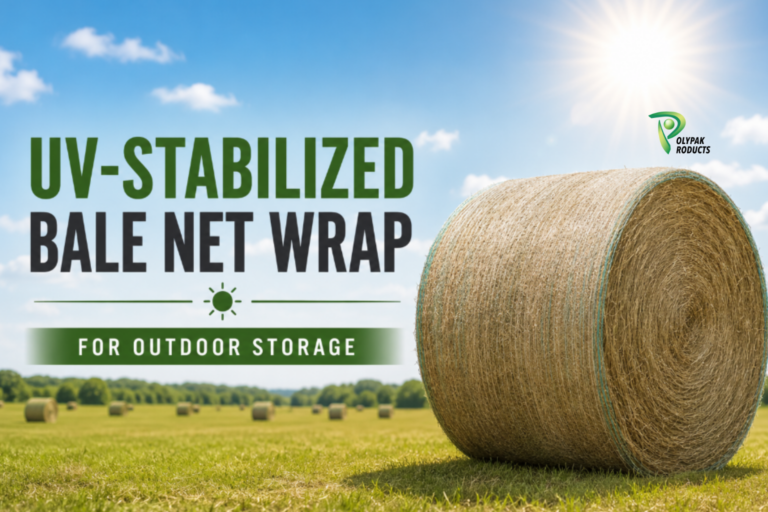
3) Climate Variability Increases Demand for UV Stability and Strength
More intense sun exposure, sudden rainfalls, and temperature fluctuations affect bales stored outdoors. As a result, demand is growing for:
-
UV-stabilized materials for long-term outdoor storage,
-
reinforced net wrap for high-density or heavy bales,
-
best-practice recommendations for bale positioning, spacing, and covering.
Farmers are increasingly adopting a risk-management mindset: it is better to invest in stable packaging than to lose forage due to unexpected weather conditions.
4) Speed and Productivity: Fewer Stops, More Bales
During peak season, time is critical. Farms aim to:
-
minimize roll changes in the field,
-
reduce net breaks and rewrapping,
-
maintain high baling speed without compromising quality.
This supports demand for:
-
high-meterage rolls,
-
stable core tubes and precise roll geometry,
-
proper compatibility with specific baler models (correct width and edge coverage).
Packaging that supports operational efficiency becomes a strategic asset during harvest.
5) System-Based Approach: Combining Materials for Better Results
The market is moving toward integrated packaging systems rather than single products. Examples include:
-
net wrap + stretch film for haylage (focused on airtight sealing),
-
silage film + oxygen barrier layer + protective cover for bunkers,
-
transport and protection solutions for stored bales.
Producers and suppliers increasingly sell not just “a roll of net,” but a complete forage preservation solution.
6) Sustainability, Regulations, and Waste Management
Across the EU, there is growing regulatory pressure regarding plastic waste and agricultural film collection. Key developments include:
-
structured collection programs for used agricultural plastics,
-
clearer labeling and traceability requirements,
-
optimization of wrapping practices to reduce material consumption without compromising quality.
In reality, sustainability in this segment often means better waste management and efficient material use, rather than eliminating polymers entirely.
7) Digitalization and Process Standardization
Another clear trend is the standardization of wrapping processes, especially in larger farming operations. This includes:
-
operator training programs,
-
defined wrapping settings (number of wraps, tension adjustments),
-
storage guidelines and documented procedures.
Digital tools are often simple—PDF guides, instructional videos, baler setting tables—but they significantly reduce mistakes and improve consistency in forage quality.
8) Market Segmentation: No More Universal Solutions
There is no longer a single “universal” net wrap suitable for every application. Farmers increasingly select materials based on specific use cases:
-
Straw: focus on speed and cost-efficiency
-
Hay: surface stability and reduced losses
-
Haylage: system integrity and UV protection
-
Long-term outdoor storage: high UV resistance and structural stability
This segmentation means manufacturers and suppliers need product lines with clear positioning and transparent recommendations.
Conclusion
The agricultural packaging market is becoming more technology-driven and performance-oriented. The main drivers of change are climate risks, the high cost of forage losses, seasonal cost efficiency, sustainability requirements, and process standardization.
Packaging is no longer just a consumable material—it is part of a broader forage quality management system. Farmers who view net wrap and film as strategic tools rather than simple inputs are better positioned to protect their yields, control costs, and maintain consistent livestock performance.