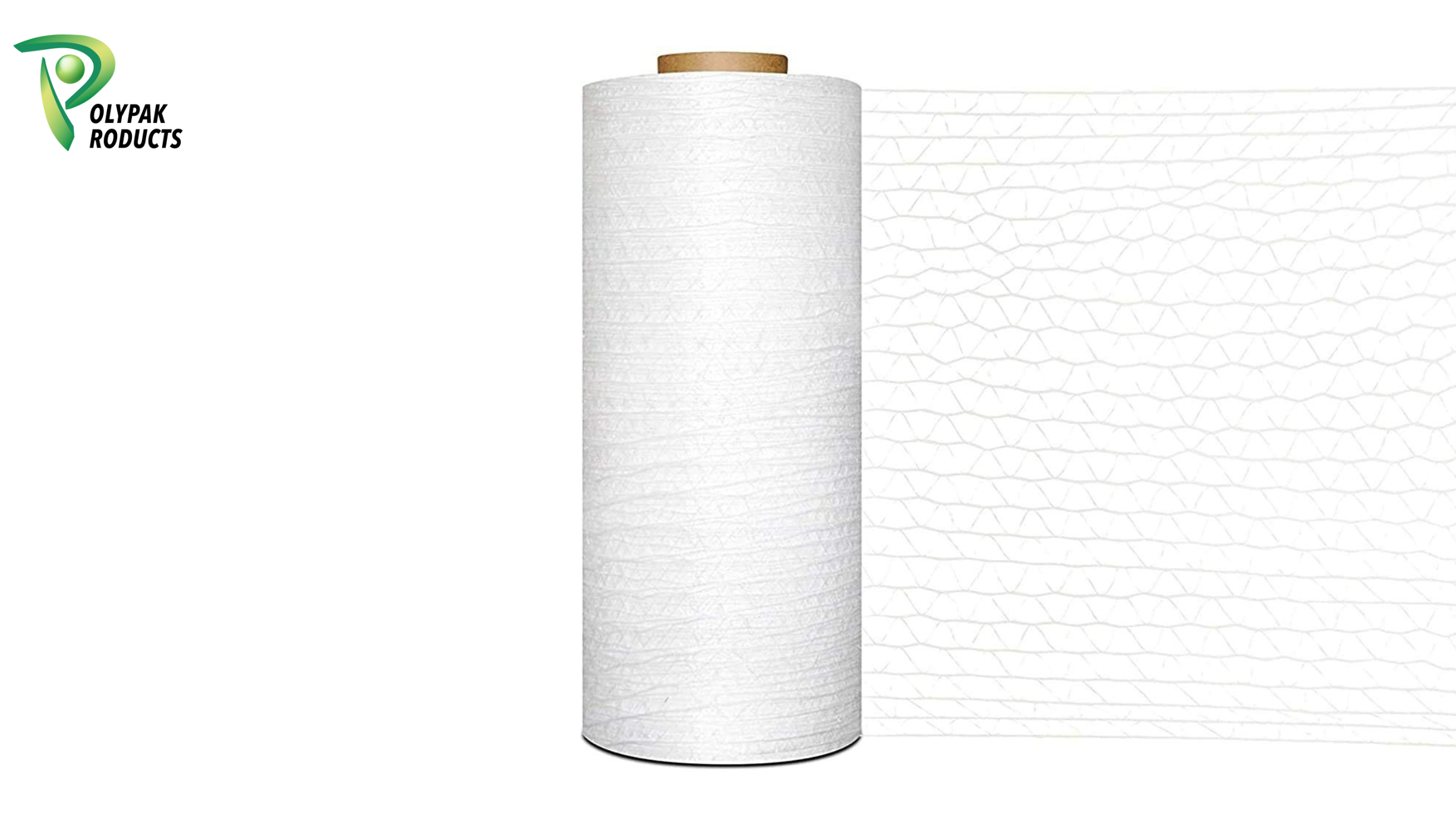
Maintaining the freshness and marketable appearance of fruits and vegetables at every stage of the supply chain is one of the key drivers of profitability for growers, distributors, and retailers. Packaging materials directly influence product condition during storage and transportation. Pallet netting has proven to be an effective and cost-efficient alternative to stretch film due to its ability to provide natural ventilation and reduce packaging costs.
Advantages of using pallet netting for fresh produce logistics
- Reduced packaging costs as less material is required compared to stretch film.
- Optimal ventilation thanks to the mesh structure.
- Reduced condensation build-up, lowering the risk of mold and product spoilage.
- Secure load stabilization during transport and storage.
- Faster wrapping — especially when using automated equipment.
- Preservation of product quality and extended shelf life, resulting in lower waste levels.
Why ventilation is crucial for fresh produce
After harvesting, fruits and vegetables continue to “breathe”: they release moisture and heat. If the packaging is airtight and does not provide air circulation:
- humidity inside the packaging increases;
- condensation forms;
- the risk of rot and loss of product appearance rises.
Pallet netting ensures continuous air exchange, helping maintain optimal storage conditions.
Compliance with international requirements and recommendations
Measures aimed at reducing fruit and vegetable waste are in line with the recommendations of FAO — the Food and Agriculture Organization of the United Nations. FAO emphasizes the importance of proper ventilation and controlled microclimate when storing fresh produce. Using pallet netting helps meet these requirements and supports supply chain stakeholders in reducing losses.
How pallet net helps prevent product spoilage
The functional benefits of pallet netting impact fresh produce quality in several ways:
- Prevents moisture condensation — humidity does not accumulate beneath the wrapping but is released naturally.
- Avoids heat build-up generated by the product.
- Reduces mechanical damage during transportation — the flexible yet strong mesh structure stabilizes the load without excessive pressure.
- Helps maintain a natural microclimate that slows down spoilage processes.
As a result, pallet netting helps preserve product freshness for longer and reduces the percentage of unsellable and damaged produce.
Conclusion
Pallet net is a modern, cost-efficient, and effective solution for packaging fresh fruit and vegetable products. It:
- reduces packaging material costs;
- improves load ventilation;
- helps extend storage life;
- minimizes risks of spoilage and mechanical damage.
By implementing pallet netting, companies can enhance logistics efficiency and reduce product losses throughout the supply chain — from the farm to the retail shelf.